Filters
Thank you! Your submission has been received!
Oops! Something went wrong while submitting the form.
Our products

.png)




.png)
.png)
.png)


.png)
No results available.
There are no results with these criteria. Try changing your search.


With a powerful ASIC miner and depending on network difficulty, it can take several weeks to mine a Bitcoin (BTC).
Yes, Bitcoin (BTC) can be mined - mining is the built-in mechanism through which new Bitcoin is created and the network is secured, and it is far from a dying model. Mining runs on the SHA-256 algorithm using specialized ASIC miners such as the Bitmain Antminer S21 or S23, which provide computing power around the clock and in return earn a proportional share of the current block reward of 3.125 BTC.
In principle, anyone with suitable hardware and a power connection can take part. How mining works in detail, which devices you need and what matters when it comes to pool, wallet and profitability is covered in the questions below as well as in our Bitcoin miner overview.
Bitcoin mining is a race: SHA-256 ASICs like the Antminer S21 bundle pending transactions into a block and try out numbers billions of times per second until one pushes the block below the required target value. Whoever finds a valid solution first appends the block to the blockchain and collects the block reward of currently 3.125 BTC plus the transaction fees.
This process is called Proof of Work; on average a new block is created every ten minutes, and the difficulty adjusts automatically so this rhythm stays stable. Because a single device wins only extremely rarely, almost all miners join a pool such as ViaBTC or Foundry USA and share the earnings based on the computing power they contribute. It is precisely this computational effort that makes the network tamper-proof - any later manipulation would have to recalculate the entire chain.
Before you even buy hardware, you should settle one question: run it at home or have it hosted? Modern SHA-256 ASICs such as the Antminer S21 Pro (234 TH/s, ~3.5 kW) are loud and draw a constant load, which is why many beginners run the miner at a hosting site with cheap industrial power rather than in the basement; in the professional segment, hydro and immersion-cooled devices are used for this.
Once the location is set, things move fast: you set up a Bitcoin wallet for the payouts, connect the miner to a pool such as ViaBTC or NiceHash and enter your wallet address there. Since a single device practically never finds a block solo, the pool bundles the power and pays out proportionally.
Whether the operation pays off for you depends above all on the electricity price - check this in advance with a mining calculator against the current BTC price and difficulty.
Bitcoin mining is based on the SHA-256 algorithm - the cryptographic computing task that every Bitcoin miner performs millions of times per second to find a valid block. SHA-256 is the mathematical foundation that all Bitcoin hardware is hard-wired to.
SHA-256 is today completely dominated by specialized ASICs such as the Bitmain Antminer S21 or MicroBT Whatsminer; graphics cards or PCs stand no chance. Other coins sometimes use entirely different algorithms (Kadena, for instance, Blake2S, Litecoin Scrypt), which is why their devices are no good for Bitcoin and vice versa. Anyone who wants to mine BTC needs SHA-256 hardware specifically.
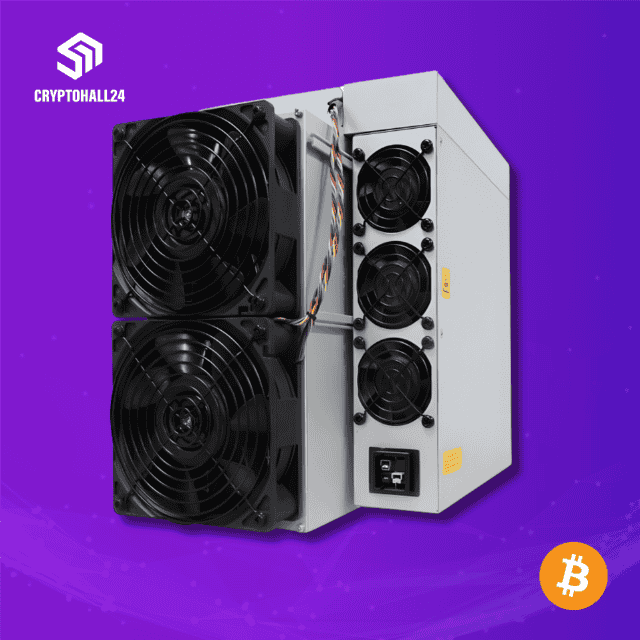
For Bitcoin mining you need SHA-256 ASIC miners - devices whose chips are built exclusively for the Bitcoin algorithm and therefore deliver many times the computing power per watt compared to ordinary hardware. Reference devices are the Antminer S23 series from Bitmain and the established S21 generation, plus the Whatsminer line from MicroBT - depending on the model, roughly 200 to over 500 TH/s.
ASIC stands for application-specific integrated circuit: such a device handles only SHA-256, but does so especially efficiently. That is today the prerequisite for staying competitive in the Bitcoin network. You will find the currently available models in our Bitcoin miner category.
Anyone wanting to mine Bitcoin (BTC) with a PC or a graphics card achieves practically no yield today - SHA-256 is served exclusively by specialized ASICs such as the Antminer S21. In the early days around 2010, CPU and GPU mining was common, but with the arrival of the first ASICs it was completely pushed out.
The gap is extreme today: a modern SHA-256 ASIC reaches several hundred TH/s, while a strong gaming graphics card sits in the range of single-digit GH/s - that is orders of magnitude of difference, combined with far higher power consumption per hash on the GPU side. A PC attempt therefore just burns electricity. Bitcoin mining happens exclusively on SHA-256 ASICs, whose profitability depends on the electricity price, BTC price and difficulty.
Usually no separate software at all - modern SHA-256 ASICs such as the Antminer S21 or a MicroBT Whatsminer are controlled entirely through their factory firmware. Via the device's web interface you enter a Bitcoin pool such as ViaBTC or NiceHash and your Bitcoin wallet address, and the miner runs; the days of mining software on PC and graphics card are over when it comes to Bitcoin mining.
Anyone who wants to get more out of their device can optionally flash custom firmware such as Vnish or Braiins OS - it allows tuning of clock, voltage and efficiency. For pure multi-device monitoring there is also management software; for a single device neither one is necessary.
Various SHA-256 ASICs are available - currently the leader is the new Antminer S23 series from Bitmain, alongside the established S21 generation, from air-cooled models through hydro variants to immersion versions for continuous operation. Sought-after devices are the Antminer S23 (318 TH/s), the Antminer S21 XP (270 TH/s) and the Antminer S21 Pro (234 TH/s), plus the Whatsminer line from MicroBT.
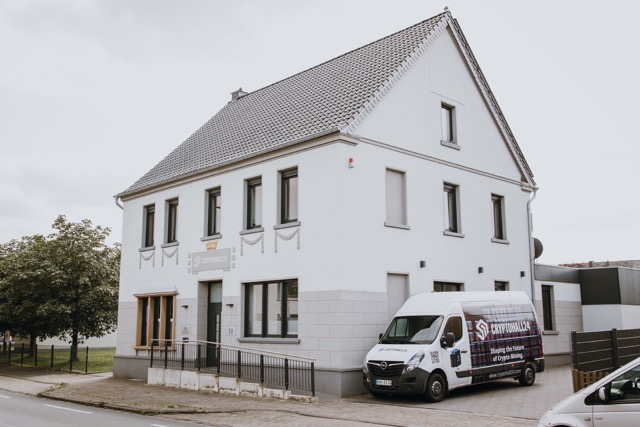
At Cryptohall24 you order the right Bitcoin miners directly - new or as a tested used device. Which model fits depends on the electricity price, installation site and budget; we are happy to advise you on this. Our article on the Antminer S23 series gives an overview of the top generation.
The range is widest with Bitcoin mining: a used Antminer S19 of the older SHA-256 generation costs a fraction of a current top device like the Antminer S21 or S23 (318 TH/s), which sits in the upper four-figure to five-figure euro range. Everything in between lines up according to hashrate and efficiency (J/TH) - from the air-cooled entry-level device to the immersion or hydro model for industrial facilities.
Anyone starting out cheaply reaches for a used predecessor model; anyone optimizing for maximum efficiency in continuous operation pays more for the latest chip generation but saves electricity per TH produced. Which model pays off only emerges from purchase price, electricity price (ct/kWh) and BTC price together. You will find the current daily prices of all listed models at the top of this page.
Buying means owning Bitcoin immediately at the current market price; mining means generating new BTC yourself with a SHA-256 ASIC and continuously putting in electricity and computing power for it. Bitcoin is by far the most liquid coin - a purchase succeeds at any time on virtually any crypto exchange such as Bitget or Binance, with no waiting time and no technology.
With mining, by contrast, the halving logic kicks in: the block reward halves roughly every four years, most recently to 3.125 BTC per block, which directly reduces the amount that can be generated per day per TH/s. Whether mining pays off is decided by the electricity price, BTC price and the steadily rising difficulty - this can be checked daily with a mining calculator. Cryptohall24 supplies the SHA-256 hardware and, on request, takes over the hosting in industrial facilities; you continue to buy the Bitcoin itself on the exchange.
A home miner is a Bitcoin miner designed for operation at home - quieter, more compact and more economical than the large industrial ASICs for data centers, often with only a few hundred watts instead of several kilowatts. Some models even use their waste heat specifically for heating.
Home miners are suitable for beginners who want to try out Bitcoin mining themselves or run it on a small scale. They deliver significantly less hashrate than an Antminer S21 or S23, but in return can be operated in a normal living environment. Anyone serious about mining for yield, however, can hardly get around an industrial ASIC.
There are three cooling types for Bitcoin miners: air cooling, hydro cooling and immersion. All of them mine BTC via SHA-256 identically, but differ significantly in noise level, possible power density and required infrastructure.
Air-cooled devices like the Antminer S21 XP dissipate their waste heat via built-in fans and form the common standard. Hydro miners such as the Antminer S23 Hydro route the heat through a closed water circuit; they are quieter and dissipate more power at the same build size, but require a suitable hydro infrastructure.
With immersion, the devices are fully submerged in a non-conductive liquid that absorbs the heat especially evenly. Hydro and immersion are typical of professional data centers, while air cooling remains the standard for home operation. This variety exists in mining only with Bitcoin.
An air-cooled Bitcoin industrial ASIC is loud - devices like the Antminer S21 reach around 75 dB in operation, roughly the level of a running vacuum cleaner, because their fans have to dissipate the waste heat of 3 kW and more in continuous operation. An ordinary living space is usually not suitable for this.
There are, however, quieter alternatives: home miners built specifically for the home as well as hydro models like the Antminer S23 Hydro run far more muted because they dissipate their heat via a water circuit instead of loud fans. Anyone who wants to avoid the noise entirely has their device hosted in a data center, where noise level plays no role.
A lottery miner is a usually small Bitcoin miner used to try to find a whole block single-handedly - that is, without a mining pool. If this succeeds, you receive the complete block reward of currently 3.125 BTC; the probability of this is, however, extremely low at today's network hashrate, hence the name lottery.
In practice, a lottery miner almost always earns nothing and only very rarely everything at once. It is less a reliable income than a playful entry into the topic of Bitcoin mining, comparable to a lottery ticket. Anyone who wants predictable yield instead joins a pool such as ViaBTC.
Yes. So that the mining pool can pay out the mined amounts, you store there the receiving address of your Bitcoin wallet - it is the destination address to which all block shares flow.
This wallet is your personal account with a private key that only you should know; only this way do the BTC truly belong to you. For larger holdings, a hardware wallet such as the Ledger is recommended, which stores your keys offline and therefore especially securely.
A Bitcoin mining pool is an association of many miners who bundle their SHA-256 computing power and split found block rewards proportionally among themselves. This way participants receive small payouts regularly, instead of waiting alone for years in vain for their own block.
At today's network hashrate, a pool is the sensible route for almost every Bitcoin miner, because it makes the yield predictable. In return, the pool charges a small fee (often 1-2 percent); the advantage of stable, frequent payouts clearly outweighs this for most. A miner can be connected to established pools such as ViaBTC or NiceHash.
The largest share of the Bitcoin hashrate is held by a few large pools - above all Foundry USA and AntPool, followed by ViaBTC, F2Pool and NiceHash. The fees are mostly around 1 to 2 percent, and billing is done depending on the pool via PPS or FPPS, with varying minimum payouts.
We cooperate directly with ViaBTC and NiceHash; via our links you receive reduced pool fees there. Shares and conditions shift continuously, which is why a daily comparison directly with the provider pays off before choosing.
There is no universally best Bitcoin pool - which one is right emerges from fee, payout model, minimum payout and pool size. Especially with a small hashrate, pool size is decisive, because a large pool smooths rare but very irregular hits into predictable, even payouts.
For getting started, ViaBTC and NiceHash are suitable, with which we cooperate and via whose links you receive reduced fees. Compare your favorites against the four criteria and check the fees daily with the provider, since the conditions change continuously.
A modern SHA-256 industrial ASIC runs around the clock during Bitcoin mining and continuously draws several kilowatts: air-cooled top models such as the Antminer S21 XP sit roughly at 3 to 3.5 kW, large immersion hydro devices like the Antminer S23 Hydro at around 7 kW and more. Electricity is thus by far the largest ongoing cost factor.
Exactly how high consumption turns out depends on the device and efficiency (J/TH): a 3.2 kW device in continuous operation results in roughly 28,000 kWh per year. The electricity price is therefore the most important profitability lever - with household electricity around 30 ct/kWh continuous operation becomes expensive, which is why mining is often done at locations with cheap energy.
The Bitcoin halving is a hard-coded event in which the block reward for miners halves. It takes place roughly every four years - most recently in 2024, when the reward dropped from 6.25 to the current 3.125 BTC per block.
The halving ensures that Bitcoin stays scarce: in total there will never be more than 21 million BTC. For miners, every halving means that less is paid out per block while the devices' power consumption stays the same - which is why hardware efficiency (J/TH) and a low electricity price become ever more important over time.
The next Bitcoin halving is expected around 2028; the block reward then drops from the current 3.125 to 1.5625 BTC. It is not tied to the calendar but to block height: every 210,000 blocks the reward halves, from which the rough four-year rhythm emerges.
For mining this is the decisive point: with the halving, the reward per block drops overnight to half, but the devices' power consumption stays the same. Older, inefficient miners often slip into the loss zone as a result, while efficient hardware like the Antminer S23 and a low electricity price become even more important. Anyone investing in hardware before a halving should therefore always also calculate profitability for the period after the reward cut.
The total supply is capped at 21 million Bitcoin from the very start, and technically there can never be more. Currently around 20 million are already in circulation; the remaining roughly one million are added gradually over the coming decades through mining, since every halving further lowers the block reward.
The last Bitcoin will presumably be mined around the year 2140. After that there is no new block reward anymore, and miners earn exclusively from the transaction fees. Mining itself therefore remains necessary to secure the network.
Whether Bitcoin mining is worthwhile in 2026 depends above all on three factors: the electricity price, the Bitcoin price and the network difficulty. Bitcoin is technically fully mineable, but since the 2024 halving only the halved reward of 3.125 BTC accrues per block, which is why electricity costs and hardware efficiency count more today than before.
With cheap electricity and an efficient device like the Antminer S23 you can mine profitably under the right conditions; with expensive household electricity around 30 ct/kWh the math quickly tips into the red. You calculate your scenario most reliably in advance with a current mining calculator such as AsicMinerValue rather than relying on blanket statements.
A Bitcoin block currently brings 3.125 BTC plus transaction fees - but no single Antminer S21 finds a block on its own. In the pool you receive a share of this reward proportional to your hashrate against the network difficulty, minus the pool fee. From this your gross yield in BTC results.
Net of that, the BTC value minus electricity costs remains. This is exactly where everything is decided: the same S21 turns a profit with cheap electricity and a loss with expensive electricity. Because the BTC price and difficulty fluctuate daily, estimate your specific yield with a mining calculator for the S21 that takes hashrate, electricity costs and price into account.
The entire Bitcoin network pays out around 450 BTC per day - 144 blocks of 3.125 BTC each - and this sum is distributed among all miners worldwide. A single device's share of it depends on how its hashrate relates to the total network computing power, and is paid out continuously via the mining pool.
The daily yield of a modern ASIC such as the Antminer S21 is accordingly a fraction of a BTC and shifts with difficulty and price. How much accumulates daily with your hardware, you estimate with a current mining calculator - the net value results after deducting the electricity costs.
With a single device it takes a very long time to mine a whole Bitcoin - usually several years, often longer than a miner even runs economically. With Bitcoin mining you do not collect a whole BTC in one piece anyway, but receive small fractions credited continuously via a mining pool.
Important for context: even a powerful single miner like the Antminer S23 generates only a small part of a Bitcoin per month - and that is the pure yield before deducting electricity costs. The actual profit lies below that and can also be negative with high electricity prices. More sensible than calculating toward a whole BTC is therefore looking at the monthly yield relative to the ongoing costs - best done concretely with a mining calculator.
Not on its own and not overnight. Bitcoin mining is no self-runner but an entrepreneurial activity with investment in hardware and ongoing electricity costs, whose result is determined by the electricity price, Bitcoin price and difficulty - especially since, after the 2024 halving, only 3.125 BTC accrue per block.
Anyone with very cheap electricity, efficient devices like the Antminer S23 and a long breath can mine profitably over time and benefit from rising prices. Realistically considered, however, mining is a medium- to long-term investment and not a path to quick riches. Your own scenario should be calculated soberly in advance with a mining calculator.
Bitcoin mining at home is possible but usually fails on the electricity price: an industrial ASIC like the Antminer S21 draws 3 to 3.5 kW, and with household electricity around 30 ct/kWh the electricity costs as a rule eat up the yield. Only with a cheap tariff or your own solar power from the photovoltaic system does home operation become attractive.
In practice, noise and waste heat are the second issue. An air-cooled S21 is loud and belongs in the basement or garage; the waste heat can be used for heating in winter, and for living spaces there are quieter immersion or hydro variants. Anyone who wants to run more than one or two devices usually fares more cheaply and quietly with hosting in a data center - more on this in our Bitcoin mining overview.
Practically all the energy a Bitcoin miner takes in leaves the device again as heat - an Antminer S21 with around 3.5 kW thus works like a powerful electric heater that mines Bitcoin via SHA-256 on the side. Heating is therefore easily possible, and at this power even with a decent effect.
By now there are home miners built specifically that run quieter and whose waste heat can be channeled specifically into a room or via a water circuit - with Bitcoin also as a hydro or immersion variant. A classic industrial ASIC, by contrast, reaches around 75 dB and belongs in the basement, garage or workshop. The electricity price tips the scales: with a cheap tariff or your own solar power, the energy used not only heats, but the mining yields recover part of the electricity costs.
Every 2,016 blocks - that is, roughly every two weeks - the Bitcoin network adjusts its difficulty automatically. This fixed epoch rhythm distinguishes Bitcoin from most altcoins, which readjust continuously.
The difficulty is the measure of how hard it is to find a valid block in the SHA-256 network. The goal of the adjustment is an average block time of ten minutes: if more computing power is added, the difficulty rises at the next date; if miners withdraw, it falls.
The higher the difficulty stands, the smaller a single device's share of the block rewards. It is thus - alongside BTC price and electricity price - one of the decisive figures for whether Bitcoin mining is worthwhile with your hardware.
Bitcoin mining is the classic hosting case at Cryptohall24: we operate SHA-256 industrial ASICs such as the Antminer S21 or S23 for you in the data center, from air to immersion cooling - you buy the device, we provide the rack space, electricity and operation, and ownership stays with you.
It is precisely with these machines that hosting pays off most: an S21 or S23 reaches around 75 dB, generates considerable waste heat and is simply uneconomical on household electricity. At a location with cheap industrial power, the BTC math becomes predictable. What matters when choosing a host we summarize in the mining hosting guide.
With Bitcoin mining, the legal and tax situation in Germany is clear and well-established: it is permitted and, in the case of regular operation aimed at profit, is treated as a commercial trade, so that the mined BTC are subject to tax. Whether mining is fundamentally permissible is, however, decided by the respective country.
On the other side of the equation are deductible expenses - electricity costs, hosting and the ASIC devices reduce the taxable profit. Internationally, the range runs from tax-free to prohibited, which is why a tax advisor is responsible for your specific treatment. This presentation is of a general nature and not tax advice.
Yes, but only within SHA-256: a Bitcoin miner like the Antminer S21 mines, besides Bitcoin, also Bitcoin Cash and Bitcoin SV, since these networks use the same algorithm; via merged mining, some further small SHA-256 coins can be mined in parallel.
What does not work: coins with a different algorithm. Kadena (Blake2S) or Litecoin (Scrypt) are out of reach for a SHA-256 miner, because the chip is hard-wired to a single computing task and cannot be reflashed. Every algorithm needs its own hardware - which one that is, the ASIC miner category shows.
Yes - a Bitcoin mining calculator estimates in advance what a SHA-256 miner yields. You enter the device's hashrate and power consumption, for the Antminer S21 XP about 270 TH/s and around 3.5 kW, plus your electricity price; from this the tool determines, with the current BTC price and network difficulty, the estimated daily, monthly or annual yield. With Bitcoin the annual view is especially worthwhile, because the next halving additionally halves the block reward.
A proven point of reference is AsicMinerValue, which lists the common SHA-256 models with daily profitability. Price and difficulty change continuously - the result remains a snapshot, so recalculate shortly before purchase.