Bitcoin mining and hosting - from Germany
German company with a clear and reliable legal structure
Personal support from dedicated account managers
Transparent prices with no hidden fees


.png)
.png)
Latest updates, deals and announcements about Cryptohall24.
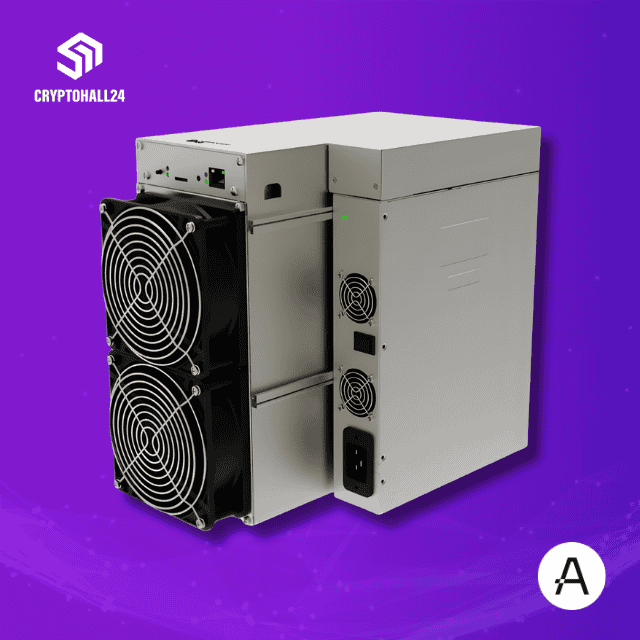
Our current most popular ASIC Miners with availability and current market prices.












.png)
.avif)
.jpeg)
Crypto mining is the process of creating new coins: specialised computers continuously solve computational tasks for a blockchain network and are rewarded with coins in return. For proof-of-work cryptocurrencies such as Bitcoin, this computing power secures the network against manipulation while bringing new coins into circulation.
To get started you need the right hardware and cheap electricity. Our crypto mining guide for beginners explains the basics.
When mining, the hardware solves cryptographic computational tasks around the clock - whoever is first to find a valid solution for the next block receives the block reward in coins. Because a single device rarely scores a hit, most miners pool their computing power in a mining pool and share the rewards.
The key factors for profitability are electricity costs, the coin price and network difficulty. You can dive deeper in our mining guide.
Bitcoin is mined with SHA-256 ASIC miners - specialised devices that can do nothing but mine Bitcoin, but do so extremely powerfully. You connect the miner to a mining pool and a Bitcoin wallet; the pool combines your power with that of others and pays out your share of the current block reward of 3.125 BTC.
At Cryptohall24 you will find suitable devices in the Bitcoin miner category - new or tested used.
All proof-of-work cryptocurrencies can be mined - besides Bitcoin (BTC), these include Litecoin (LTC), Kaspa (KAS), Ethereum Classic (ETC), Dogecoin or Dash. Each uses its own algorithm and requires matching ASIC hardware; a Bitcoin miner cannot mine Kaspa and vice versa.
At Cryptohall24 you can get devices for the most important coins, from Kaspa to Litecoin. Which coin is worthwhile depends on price, difficulty and electricity cost.
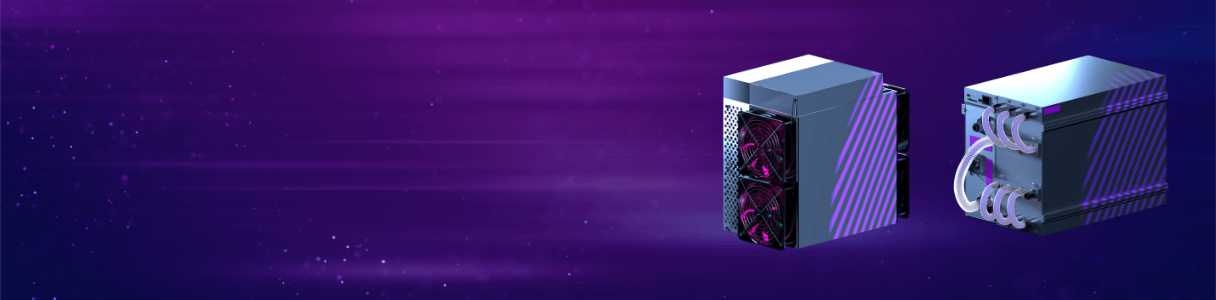
An ASIC miner is a specialised computer that is locked to exactly one mining algorithm from the factory - it can only handle this single task, but does so many times more efficiently and faster than a graphics card. ASIC stands for application-specific integrated circuit.
This is precisely what makes ASICs the prerequisite today for serious mining of coins like Bitcoin or Kaspa. Our article What is an ASIC miner explains what is behind it.
For the major proof-of-work coins such as Bitcoin, Litecoin or Kaspa, mining with a normal PC or graphics card is not worthwhile - specialised ASIC miners dominate here, against which consumer hardware stands no chance and ends up consuming more electricity than it brings in. One exception is a few ASIC-resistant algorithms such as Monero (RandomX), which is deliberately designed for CPU mining.
Anyone who wants to seriously mine coins like Bitcoin can hardly avoid an ASIC. Our article on ASIC miners provides some context.
No, real cryptocurrency cannot be mined with a smartphone. A phone's computing power is vanishingly small compared with the mining network - a single ASIC miner delivers many times the output of millions of smartphones, and continuous operation would overload the battery and the device anyway. The question of which coins you can mine with a phone therefore has the same answer: realistically none.
So-called 'mining apps' for Android or iPhone are, as a rule, not real mining. They merely credit in-app points or tokens - financed through advertising or cloud promises, often dubious and without any real coin yield. Apple and Google have also banned genuine mining from their app stores.
Anyone who really wants to mine coins needs an ASIC miner and cheap electricity. Our mining guide shows how to get started; suitable devices are available in the ASIC miner shop.
Whether crypto mining is worthwhile in 2026 comes down to one factor above all: the electricity price. Power is by far the biggest ongoing cost item, because an ASIC runs around the clock - with cheap electricity and an efficient device, mining stays profitable, while with expensive household electricity the same device quickly slips into the loss zone. Price and network difficulty are further variables.
That is exactly why cheap electricity is the most important lever - many therefore mine at low-cost locations or move into hosting, with us from 4.5 ct/kWh (see mining hosting). It is best to work through your specific scenario in the mining calculator.
The yield from crypto mining is your hardware's coin share minus electricity costs - a fixed figure cannot be given, because price, difficulty, pool fee and electricity price fluctuate daily. With cheap electricity a plus remains after deductions, while with expensive household electricity the same device can slip into the loss zone.
So it is the conditions that matter, not the device alone. How to estimate your specific yield is shown in the next question.
The most reliable way to work through mining is with a mining calculator: you enter your device's hashrate and power consumption as well as your electricity price, and the tool determines the estimated daily or monthly yield from the current price and difficulty. This way you can see in black and white whether a model is profitable for you.
Try it directly with our mining calculator. Because price and difficulty fluctuate, every figure remains a snapshot.
Getting started with mining begins with the hardware - depending on the coin and performance class, the range spans from smaller entry-level devices in the low price segment to current industrial ASICs in the upper four-figure euro range. On top of that come the ongoing electricity costs, because an ASIC runs around the clock.
In the ASIC miner shop you will mostly find current new devices with all models and prices; we offer tested used devices when they are available - a cheaper entry point, as long as stock lasts.
Mining a whole Bitcoin on your own takes a statistically very long time with a single device - the network difficulty is high, and a single miner rarely finds a complete block. That is why most people mine in a pool and continuously receive small fractions of a Bitcoin as their share of the reward.
How much BTC a particular device brings in per day depends on hashrate and difficulty and can be estimated in the mining calculator.
Getting started works in four steps: choose a coin, acquire a suitable ASIC miner, set up a wallet for the payouts and connect the device to a mining pool. After that, the hardware runs continuously and mines coins.
Cryptohall24 supports you throughout from a single source - from selecting the device in the ASIC miner shop to operation. Our mining guide for beginners explains it step by step.
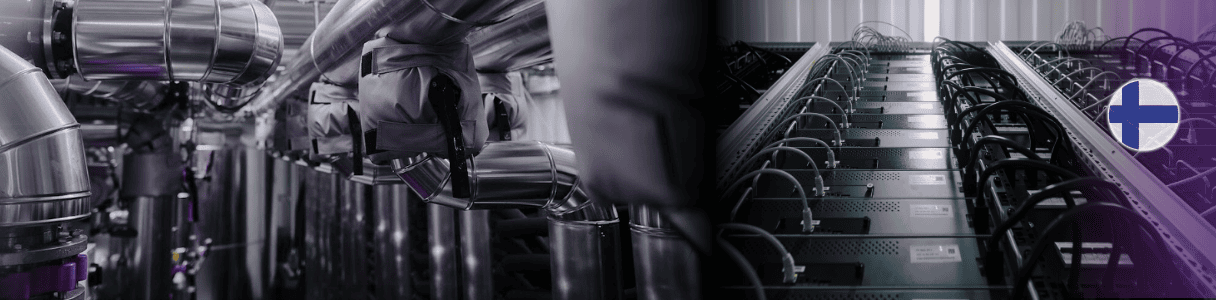
Both are possible - at home you mine independently, but you have to live with noise (industrial ASICs reach roughly vacuum-cleaner levels), waste heat and household electricity, which often eats up the margin. Hosting in a data centre takes noise, heat and expensive electricity off your hands, while the device remains your property.
Which path suits you depends on quantity, electricity tariff and living situation. Find out how our miner hosting works here.
Whether crypto mining is legal depends on the country - in most Western countries it is permitted. In Germany, Austria and Switzerland, for example, mining is legal without further ado; some countries restrict it because of electricity consumption or ban it entirely.
For tax purposes in Germany, the following applies: anyone who mines regularly and with the intention of making a profit usually carries on a commercial activity - the coins are then taxable income, while electricity, hosting and hardware reduce the profit as expenses. A tax advisor should review your exact classification; this note does not replace advice.
Cryptohall24 is your German provider for crypto mining hardware and mining hosting from a single source: you buy ASIC miners for Bitcoin, Kaspa, Litecoin and other coins - new or tested used - and, if you wish, have them operated directly in our data centres. German company, personal contacts, digital processes.
Browse the ASIC miner shop or get to know us on About us. If you have questions about device selection or hosting, we are happy to advise you via the contact page.


.png)
%20.png)

.png)


%20Miner%20L9%2016GH.jpg)

